Benjamin Banneker: The Power of an Unrecognized Mind
This featured post examines the life and legacy of Benjamin Banneker, a self-taught scientist, astronomer, and inventor whose contributions helped shape early America despite the barriers of race and exclusion. It explores his early years, intellectual discipline, and quiet resilience, highlighting how curiosity and observation guided his work in astronomy, timekeeping, surveying, and publishing. Through both well known achievements and lesser known insights, the piece reflects on how Banneker’s genius challenged the assumptions of his time and continues to influence modern systems we rely on today. At its core, this is a essay on unrecognized brilliance, perseverance, and the enduring impact of a mind committed to truth and precision.
2/3/20263 min read
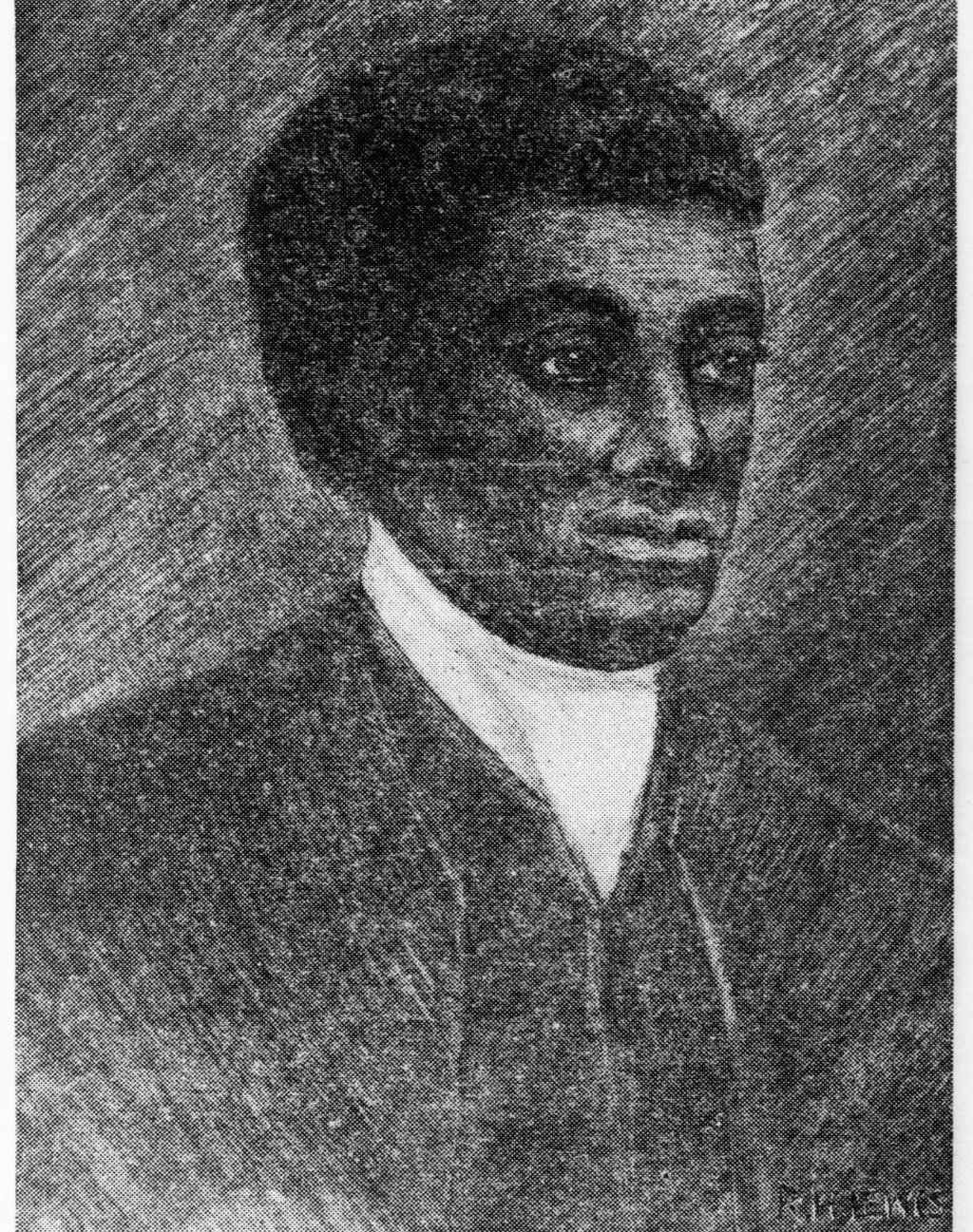
Benjamin Banneker was born in 1731, in a time when freedom, education, and opportunity were not equally distributed, especially to Black Americans. Yet his life stands as a quiet contradiction to the assumptions of his era. Without formal schooling, without institutional backing, and without the protections afforded to others, Banneker emerged as one of the most brilliant scientific minds of early American history. His story does not begin with privilege; it begins with curiosity.
Raised on a farm in Maryland, Banneker spent much of his early life working the land. His grandmother, an English indentured servant, taught him to read, while his mother, formerly enslaved passed along both resilience and self-reliance. Formal education was brief and inconsistent, but Banneker’s hunger for understanding was relentless. He learned mathematics largely on his own, studying borrowed books by candlelight and applying abstract concepts to the world around him. This habit of observation would define his life.
As a young man, Banneker became fascinated with mechanical movement and timekeeping. After examining a pocket watch borrowed from a neighbor, he meticulously carved wooden components and constructed one of the first fully functional wooden clocks made in America. It kept accurate time for decades. This was not imitation, it was mastery! The clock became a local marvel and a symbol of what disciplined intellect could accomplish, even when recognition was scarce.
Banneker’s mind extended far beyond mechanics. He developed a deep understanding of astronomy, charting the movements of stars, planets, and eclipses with remarkable precision. Using advanced mathematical calculations, he predicted solar eclipses years in advance—correcting errors made by more formally trained astronomers of his time. His calculations were not theoretical exercises; they were practical demonstrations of scientific authority.
Between 1791 and 1796, Banneker published a series of almanacs that combined astronomical data, weather forecasts, agricultural guidance, and medical insights. These almanacs were widely circulated and relied upon by farmers and merchants alike. At a time when Black intellect was openly questioned and dismissed, Banneker’s work spoke with undeniable accuracy.
One of the most historically significant moments of his life occurred when he was selected to assist in the surveying and planning of Washington, D.C. As part of the team responsible for laying out the nation’s capital, Banneker applied his astronomical expertise to map the land with precision. His contributions were foundational, even though they were rarely acknowledged in full during his lifetime.
Banneker was not silent about injustice. He directly challenged the contradictions of a nation founded on liberty while permitting slavery. In a now famous letter to Thomas Jefferson, he confronted the hypocrisy of denying freedom and equality to people of African descent. He included a copy of his almanac to demonstrate, unequivocally, the intellectual capacity of Black Americans. Jefferson responded respectfully, even forwarding Banneker’s work to the French Academy of Sciences as evidence against prevailing racial myths.
Despite this, Banneker never gained the institutional security or recognition afforded to his white contemporaries. His achievements were often minimized, questioned, or omitted from dominant historical narratives. Yet his legacy persists quietly through the systems he helped shape.
Modern astronomy, civil engineering, timekeeping, agricultural forecasting, and urban planning all bear traces of his work. The use of astronomical calculations in surveying, the reliance on almanacs for coordinated farming cycles, and the early application of science to civic infrastructure reflect principles Banneker embodied centuries ago. Less widely known is that Banneker was also an early environmental observer, noting seasonal changes, soil conditions, and ecological patterns long before such practices were formalized. His journals reveal a man deeply attuned to nature, disciplined in record-keeping, and guided by empirical truth rather than assumption.
Benjamin Banneker lived in a country that benefited from his genius while questioning his humanity. Yet he persisted—not through protest alone, but through precision. His life reminds us that brilliance and truth do not need validation to exist. His story is not simply about invention, it's about visibility, and the cost of being exceptional in a world unwilling to fully acknowledge you. Benjamin Banneker embodied the enduring power of a mind that refused to shrink itself to fit the limitations imposed upon hm.
Connect
Join our thoughtful community for insights
Contact
Subscribe
info@inkthevision.com
© 2025. All rights reserved.