George Washington Carver: Genius Without Permission
George Washington Carver is often remembered for peanuts, but that simplified narrative overlooks the true depth of his genius and devotion. This piece explores the institutions that denied him, the isolation he endured as the only Black student in academic spaces, and the quiet resilience that carried him forward. Through detailed historical context, we examine Carver’s groundbreaking work with crop rotation, his hundreds of practical innovations using peanuts, sweet potatoes, soybeans, and more, and his radical choice to give his discoveries freely rather than pursue wealth or fame. Sought after by industrialists, presidents, and philanthropists, Carver instead chose a simple life at Tuskegee Institute, dedicating himself to service, education, and empowerment. This is not just a biography, it is a study in purpose, humility, and the kind of brilliance that changes lives without demanding applause.
1/30/20265 min read
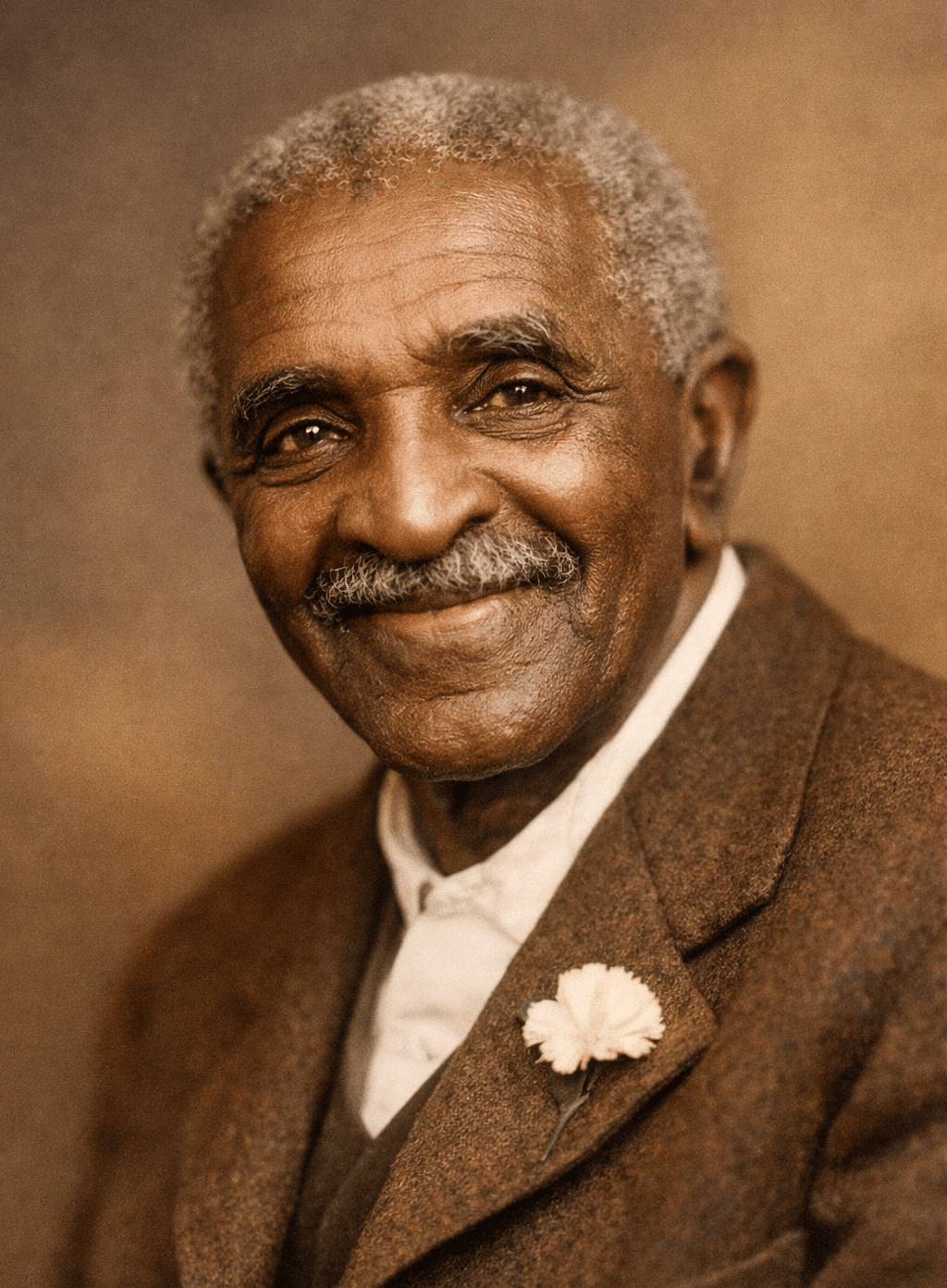
George Washington Carver’s life is a reminder that purpose does not ask for perfect beginnings.
Born into slavery during the final years of the Civil War, Carver entered the world with nearly everything stacked against him. As an infant, he was kidnapped, separated from his family, and raised in a society that had little interest in educating or elevating a young Black boy with curiosity in his eyes and questions on his mind. After emancipation, Carver was taken in by Moses and Susan Carver, a white couple who had owned his parents but raised him with uncommon kindness for the era. Susan Carver recognized his fragile health and intellectual curiosity, teaching him to read, write, and care for plants. She became his first informal teacher, encouraging his fascination with nature rather than suppressing it. Even with that early support, the world beyond their farm offered no easy passage. What he lacked in resources, he made up for in imagination.
Education Claimed, Not Granted
Carver’s hunger for learning forced him to leave the Carver household while still young. There were no schools nearby willing to educate Black children, so he walked miles—sometimes dozens at a time, moving from town to town in search of classrooms that would accept him. He attended segregated schools across Missouri and Kansas, often sleeping in barns, sheds, and abandoned buildings simply to remain close to places that allowed him to learn. Education was never handed to him. He pursued it relentlessly. Rejection followed him, nonetheless.
Carver was denied admission from multiple institutions once his race became known. One of the most documented denials occurred when he applied to Highland College in Kansas. Initially accepted by correspondence, his offer was rescinded upon arrival when administrators realized he was Black. This moment matters because he didn't protest loudly, or retreat; he adjusted and continued forward.
Iowa: Isolation, Excellence, and Unprecedented Firsts
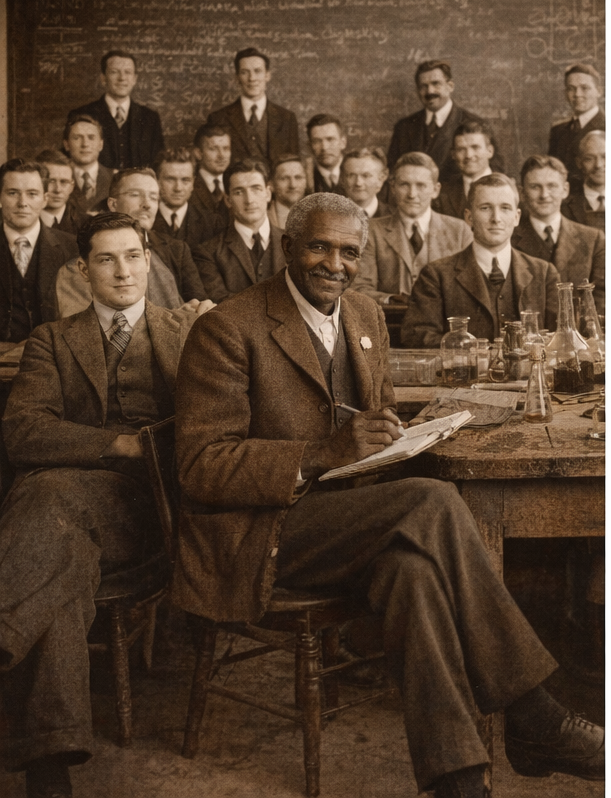
Eventually, Carver was admitted to Simpson College in Indianola, Iowa, where he studied art and music. At the time, Iowa had very few Black residents, and Carver was often the only Black person in classrooms, studios, and academic spaces. Photographs from this period are revealing. In group images, he is consistently the lone Black face among white students and faculty present, yet unmistakably isolated. These images are not incidental. They reflect the reality of his experience: learning, contributing, and excelling in environments where he was never expected to belong.
Recognizing his intellect and discipline, Simpson College faculty encouraged him to pursue science. He later transferred to Iowa State Agricultural College, now Iowa State University, where he made history as both the institution’s first Black student and, later, its first Black faculty member. Again, the visual record tells the truth. In laboratories, classrooms, and faculty portraits, he often stands alone, not as a symbol, but as evidence of quiet, undeniable excellence. Titles were never his aim, but impact was. Carver believed knowledge should serve people, not egos.
The Work Most People Never Learn About
George Washington Carver is most often associated with peanuts, yet that association barely scratches the surface of his contributions. His true mission was agricultural independence for poor Southern farmers, many of them formerly enslaved, whose soil had been depleted by years of cotton monoculture. Carver introduced crop rotation and developed practical, affordable applications using plants farmers could realistically grow.
Through his research, the peanut became far more than a crop. He documented hundreds of uses, including flours, milks, inks, dyes, paints, soaps, cosmetics, paper treatments, medicinal oils, fuels, and lubricants. While he did not invent peanut butter, he transformed the peanut into an economic lifeline. His work with sweet potatoes yielded more than one hundred applications, ranging from flours and starches to adhesives, molasses, vinegar, dyes, and industrial substitutes. He also conducted extensive research on soybeans, developing foods, plastics, fertilizers, soil conditioners, and livestock feed improvements. Beyond these, Carver worked with cowpeas, pecans, cotton byproducts, and wild plants for both medicinal and industrial use. His approach was always practical, rooted in sustainability and accessibility.
A Crucial Ethical Choice
Carver refused to patent the vast majority of his discoveries. He believed knowledge was meant to liberate, not be owned. He often stated that his ideas were gifts from God and therefore not his to sell. This decision cost him immense personal wealth, however it ensured his work reached millions.
Chosen, Sought After and Still Rooted
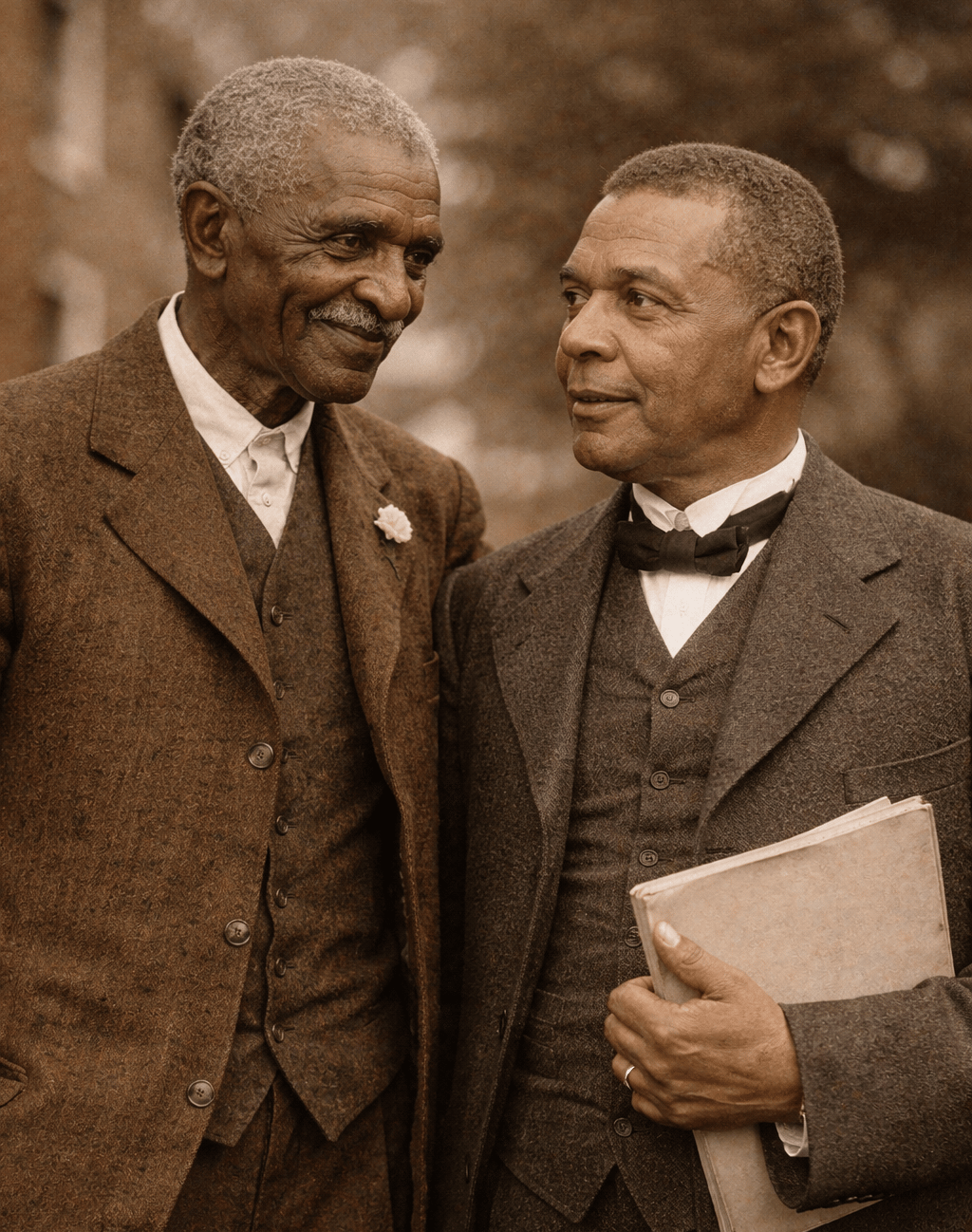
Booker T. Washington personally recruited Carver to join the faculty at Tuskegee Institute, a newly formed Black institution still establishing its credibility. This choice was pivotal. Carver received invitations and opportunities from industrialists, philanthropists, and U.S. presidents. Andrew Carnegie and Henry Ford sought his counsel. Doors to wealth, recognition, and comfort were open to him. He declined them. Instead, Carver chose to live simply on the Tuskegee campus, devoting his life to teaching, experimentation, and service to a community that reflected the very people he had once been excluded alongside. There was no pursuit of fame, appetite for status, only alignment.
Genius Without Ego
Carver faced systemic exclusion, isolation, and repeated denial, yet he never responded with bitterness. He did not argue for his worth but demonstrated through his actions. Farmers’ yields improved, their soil recovered, communities stabilized, and generations benefited from his genius. Presidents listened, Industrial leaders sought his insight, yet he remained grounded in humility. He rose not by force, but by quiet excellence.
What He Embodied
George Washington Carver’s legacy is defined not only by what he discovered, but by what he demonstrated: resilience amid institutional rejection; imagination when opportunity was withheld; persistence through isolation; self-reliance anchored in discipline and faith; dedication to service over status; and peace as strength, not submission.
He transformed tragedy into triumph not by denying hardship, but by outgrowing it. His life stands as proof that greatness does not require acceptance, privilege, or permission, only devotion to something larger than the self. When purpose is clear, circumstances lose their authority.
Image Reference
The following images below provide visual and historical context for the article above.
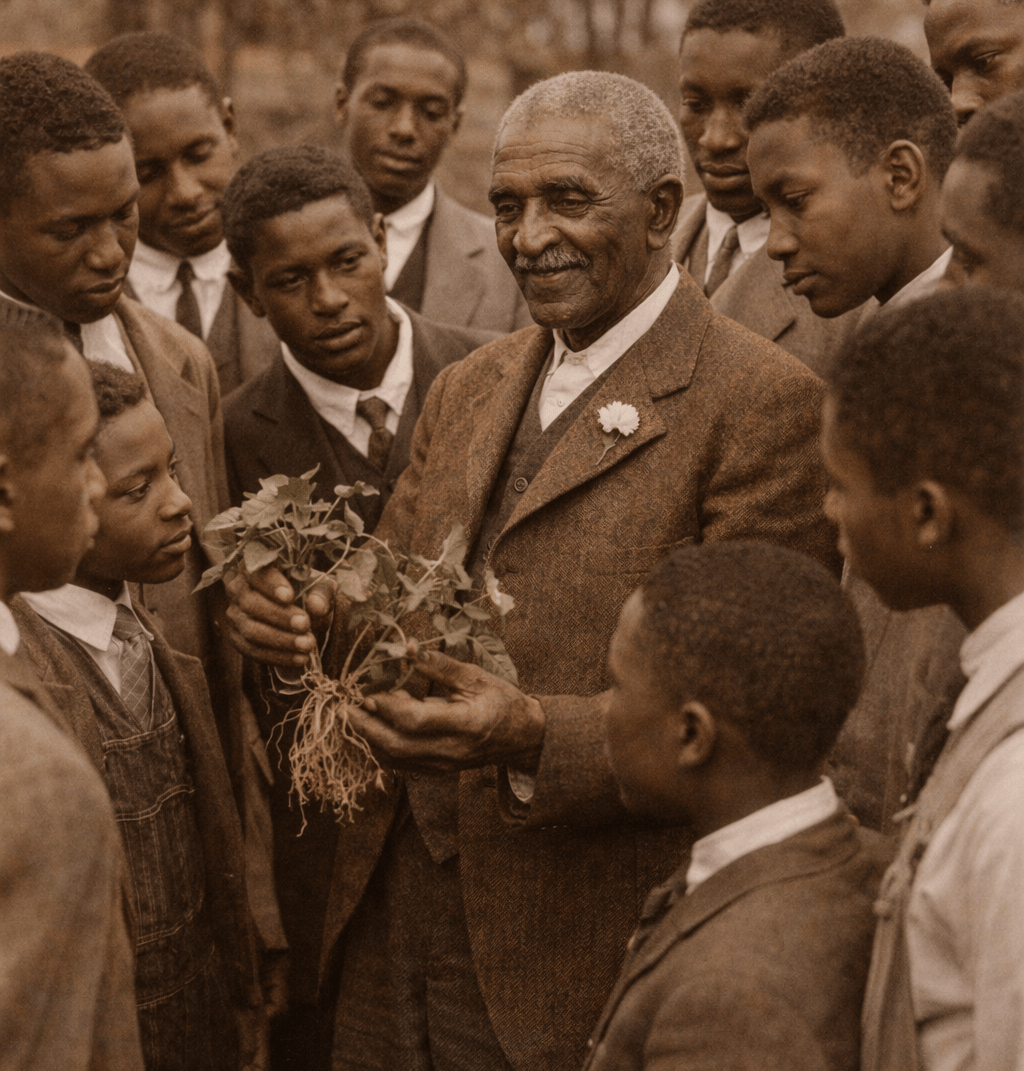
Photo 1 — George Washington Carver at Iowa State Agricultural College—serving as the institution’s first Black faculty member in classrooms where he often stood alone.
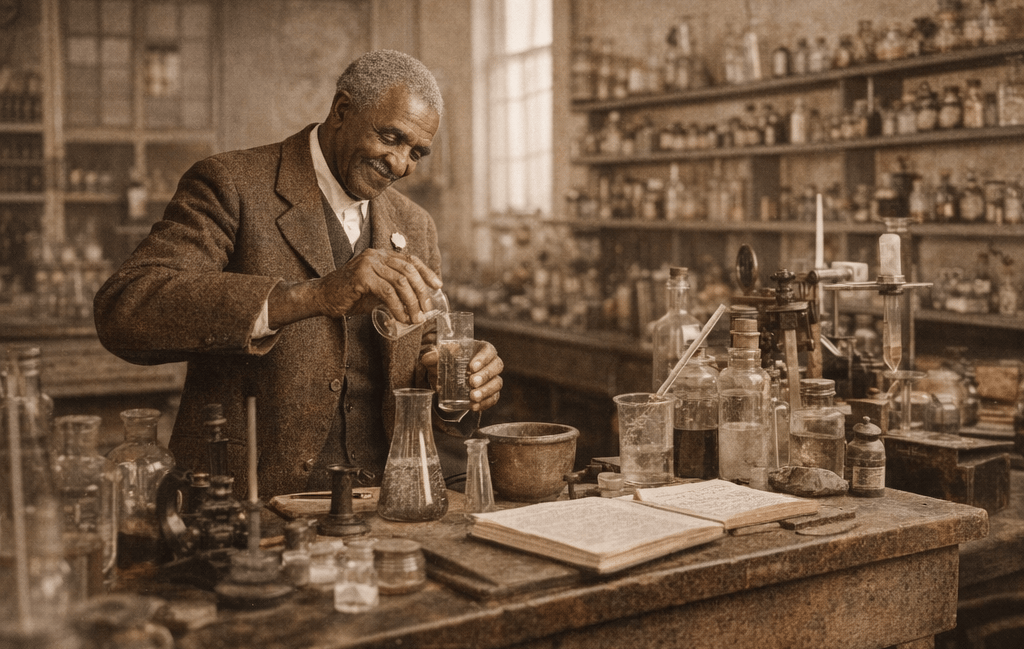
Photo 2 — George Washington Carver working in his laboratory at Tuskegee Institute—where limited resources never limited vision.
Photo 3 — Carver teaching at Tuskegee—transforming knowledge into inheritance for generations yet to come.
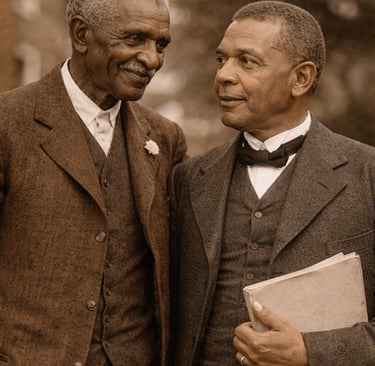
Photo 4 — Booker T. Washington and George Washington Carver—two architects of Black self-determination, united by purpose rather than prestige.
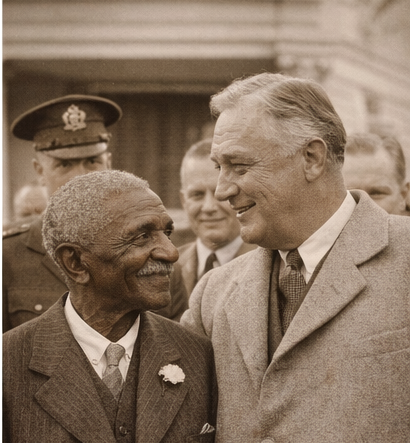
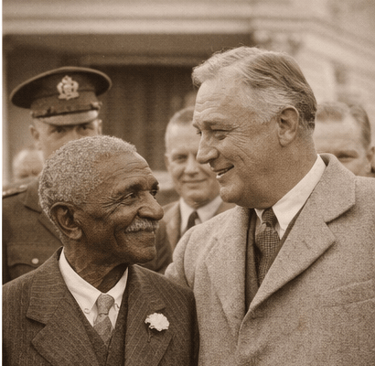
Photo 5 — George Washington Carver with President Franklin D. Roosevelt—his agricultural insight sought at the highest levels of leadership.
Connect
Join our thoughtful community for insights
Contact
Subscribe
info@inkthevision.com
© 2025. All rights reserved.